Back to Blog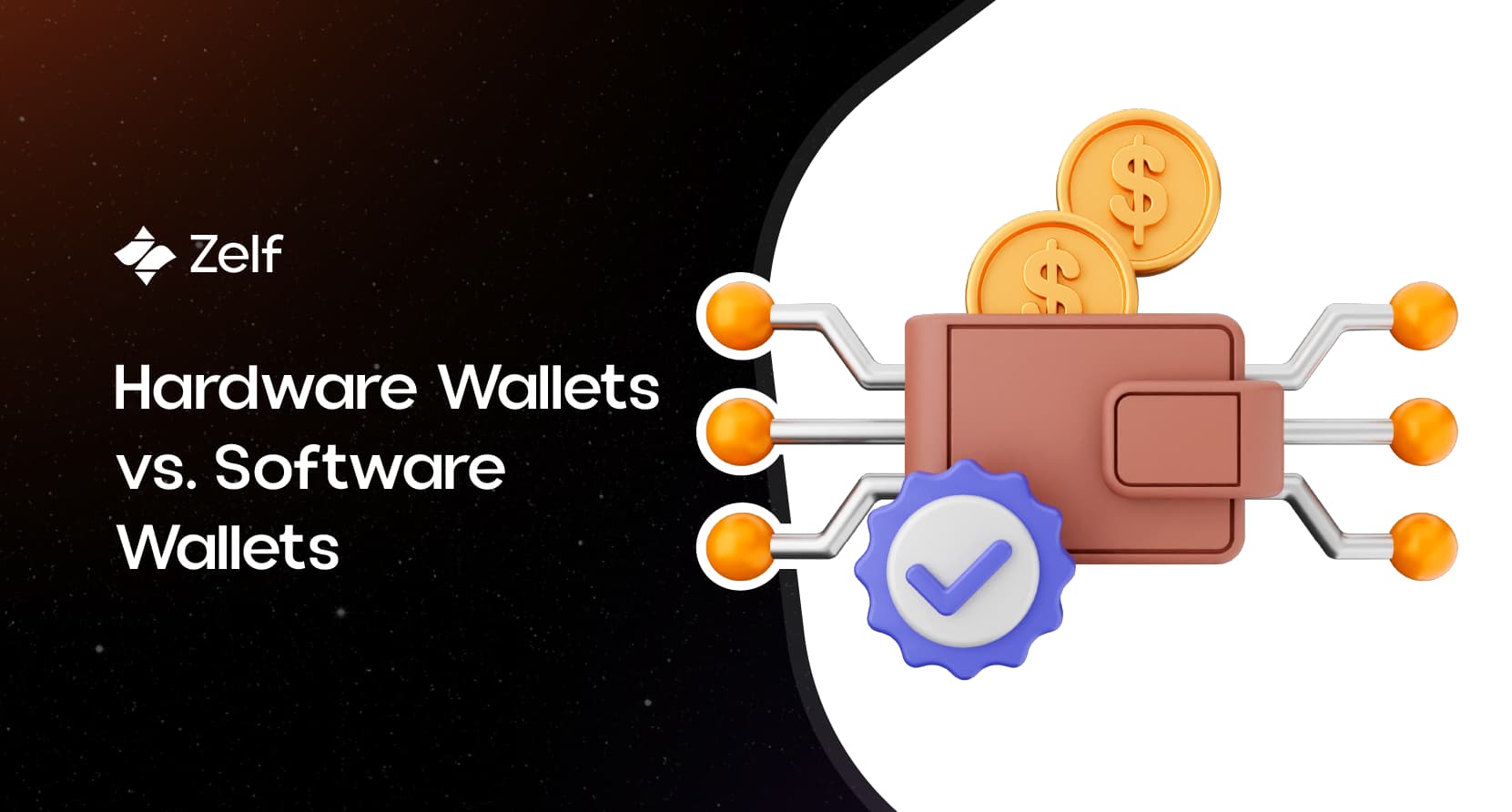
Hardware vs. Software: Which Crypto Wallet Is Safer?
Compare hardware and software crypto wallets and discover how innovative solutions like Zelf offer encrypted facial access and secure recovery, making crypto safer than ever.
ZELF Team•
Crypto security is one of the most critical aspects of managing digital assets. With hacks, phishing attacks, and human errors on the rise, choosing the right wallet can mean the difference between keeping your crypto safe or losing it permanently.
Two of the most popular types of wallets are hardware wallets and software wallets. But which is actually safer? This guide breaks down their differences, security strengths, weaknesses, and modern solutions to help you decide.
What is a Hardware Wallet?
A hardware wallet is a physical device designed to store your private keys offline. Because it remains disconnected from the internet, it is often referred to as a cold wallet.
Examples: Ledger, Trezor
Pros
- Private keys stored offline, reducing exposure to online hacks
- Strong protection against malware and phishing
- Ideal for long-term storage of large crypto holdings
Cons
- Can be lost, stolen, or physically damaged
- Require careful seed phrase backup
- Less convenient for frequent transactions
- Initial purchase cost
Hardware wallets are often considered one of the safest options for cold storage, but they are not immune to human error. Losing the device or seed phrase can still result in permanent loss.
What is a Software Wallet?
A software wallet is an application installed on your phone, desktop, or browser. It connects to the internet and allows quick access to your funds for trading, staking, and daily transactions.
Examples: ZELF, MetaMask
Pros
- Easy to use and beginner-friendly
- Instant access to funds
- Ideal for active traders and DeFi users
- Often free to download and use
Cons
- Vulnerable to malware or device compromise
- Phishing attacks can trick users into revealing keys
- Traditionally rely on device encryption of seed phrases for security
However, modern software wallets are no longer as simple as they once were. ZELF, for example, extends traditional wallet security by introducing encrypted facial authentication and secure key recovery powered by HumanAuthn. Instead of relying on fragile seed phrases, Zelf enables recovery through encrypted facial proofs, reducing the risk of permanently losing access to funds while preserving the principles of self-custody.
Security Comparison: Hardware vs. Software
Security boils down to how each wallet protects your private keys. Hardware wallets offer strong offline protection, but losing the device or seed phrase can lock you out permanently. Software wallets, on the other hand, are convenient but expose keys to malware and phishing scams.
Real-world cases show millions lost to compromised devices and poorly protected wallets. In these scenarios, user responsibility plays a major role. Modern solutions like ZELF combine software convenience with hardware-level security features. Using HumanAuthn, ZELF encrypts private keys through your face, making them safe even if your device is lost or hacked.
Recovery Options and Key Management
Hardware Wallets
Most rely on seed phrases for recovery. If the phrase is lost, the crypto cannot be recovered. Backups are offline and must be stored safely.
Software Wallets
Traditional software wallets also depend on seed phrases or passwords, which can be lost, stolen, or forgotten.
Modern Self-Custodial Solutions
Wallets like ZELF eliminate seed phrase dependency. With HumanAuthn, users can securely recover wallets using encrypted facial verification stored on the blockchain. This allows fast, reliable recovery without exposing private keys or personal biometric data.
Usability and Convenience
Hardware wallets offer strong security but can slow down your workflow, especially for frequent transactions or mobile access. Software wallets are convenient but need careful management to avoid hacks.
Modern solutions like ZELF provide the best of both worlds:
- Secure encrypted access through your face
- Seed-phrase-free recovery so you never lose access
- Device-agnostic functionality for access on multiple devices
This combination makes it easy for users to manage crypto safely without sacrificing convenience.
Recommendations: Which Wallet Is Safer?
- Hardware Wallets: Best for users who prioritize offline security and can manage the device carefully.
- Software Wallets: Good for beginners or frequent users who value convenience, but require caution.
- Zelf Wallet: Combines software convenience with advanced security, using HumanAuthn for encrypted, seed phrase-free access and recovery.
For most users, especially those juggling multiple wallets or frequent transactions, Zelf provides a balance of safety, control, and usability that neither traditional hardware nor software wallets fully offer.
Conclusion
Wallet choice determines how safe your crypto really is. Hardware wallets provide strong offline protection but can be inconvenient and risky if lost. Software wallets are easy to use but vulnerable to online threats. Modern wallets like ZELF combine the safety of encrypted key storage with convenient, face-based recovery, redefining what it means to be secure in crypto.
Take Control of Your Crypto Security
Keep your crypto truly safe and accessible. Try ZELF today and secure your assets with next-generation face-based authentication.
Frequently Asked Questions (FAQs)
What is the difference between hardware and software wallets?
Hardware wallets store private keys offline on a physical device, while software wallets keep keys digitally on a device or app connected to the internet.
Can hardware wallets be hacked?
While hardware wallets are offline, they are not completely immune. Physical theft, lost seed phrases, or firmware vulnerabilities can compromise security. It would be safe to say that hardware wallets significantly reduce hacking risks because private keys remain offline, but users can still face threats from compromised devices or phishing attempts.
Are software wallets safe to use for crypto?
Modern software wallets without HumanAuthn are vulnerable to hacks and MITM attacks. The great majority of digital asset losses are incurred in software wallet architectures that lack an extra layer of security.
How does ZELF make software wallets more secure?
ZELF generates ephemeral private keys from your face without storing biometric data, allowing for quick wallet recovery and asset transaction from any device, protecting against phishing, malware and MITM attacks.
Why is ZELF's recovery superior to the industry?
Most self-custody wallets depend on the user's ability to securely store a seed phrase. This creates a significant risk: if the phrase is lost, damaged, or forgotten, access to the wallet can be permanently lost. Other companies attempt to address this by offering custodial recovery services, but these typically require KYC with a government-issued ID, introducing reliance on third-party providers and weakening the principle of true self-custody. ZELF offers a recovery solution powered by HumanAuthn, a biometric-bound and decentralized system, that guarantees access to private keys with proof of humanity.
crypto-wallethardware-walletsoftware-walletsecurityhumanauthnself-custody