No. Someone cannot steal your crypto simply by knowing your public wallet address.
A wallet address is meant to be shared when receiving cryptocurrency. The real risk comes from exposing the private key or seed phrase that gives control over the wallet. If an attacker obtains either, they may be able to authorize transactions and move the associated funds.
This is where
Zelf Wallet takes a different approach. Instead of making an exposed seed phrase the central recovery secret, Zelf securely wraps the user's private key material in a non-biometric Zelf QR and uses HumanAuthn for live facial biometric authentication. This addresses a common root cause of traditional wallet theft: exposure of the secret needed to control the wallet.
Your public wallet address can be shared. Your private key and seed phrase are what need protection. Here's what you need to know.
Can Someone Steal Crypto With Your Wallet Address?
No. Knowing your public wallet address does not give someone the ability to authorize transactions or move the crypto associated with it.
Your wallet address is the information you provide when someone wants to send you cryptocurrency. It is public by design and can be safely shared.
The private key is different. It is secret cryptographic material used to authorize transactions from the associated account.
The distinction is simple:
- Public wallet address: Used to receive cryptocurrency and safe to share publicly.
- Private key: Used to authorize transactions and must remain secret.
Knowing your wallet address does not give someone your private key.
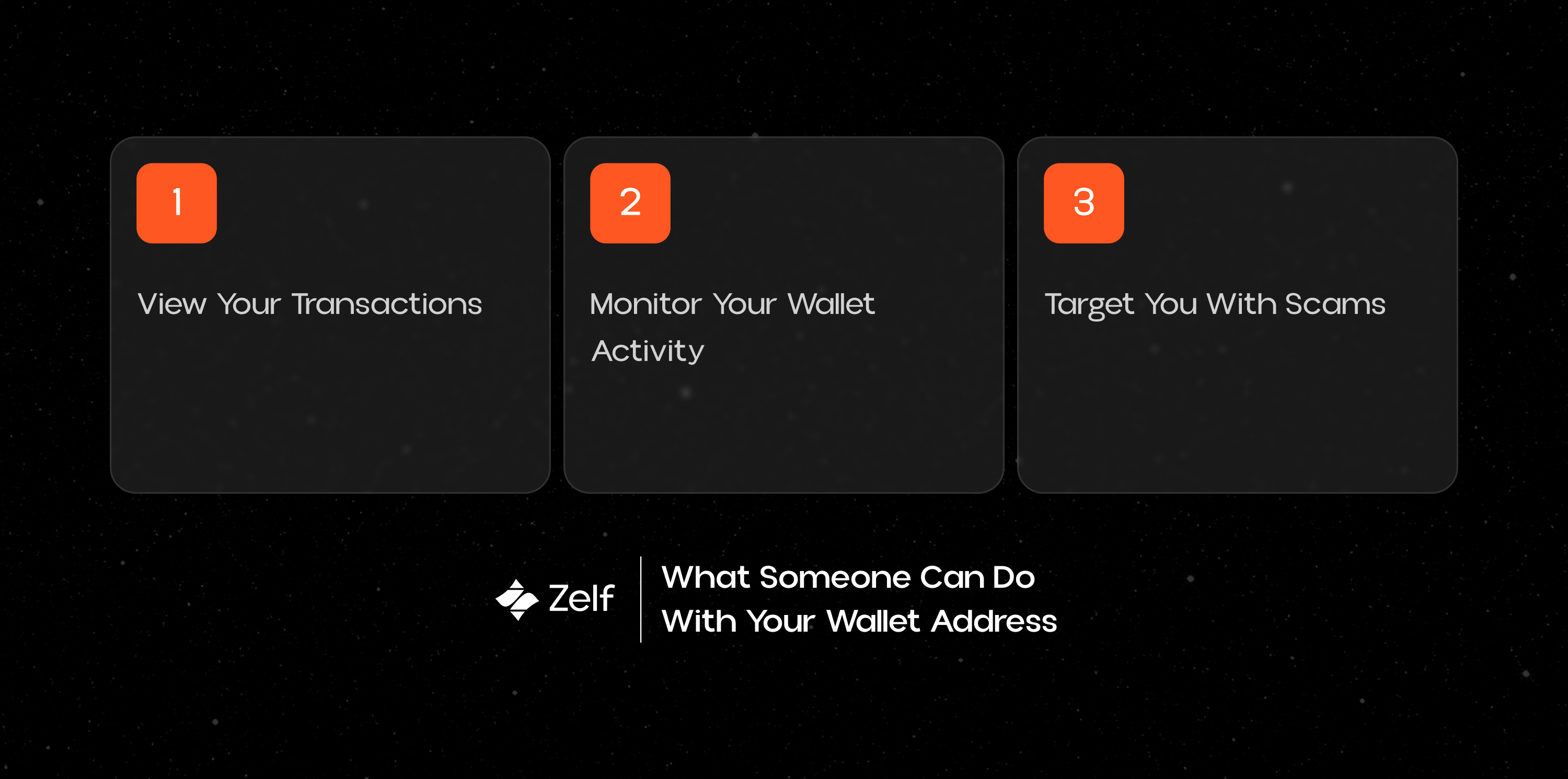
What Can Someone Do With Your Crypto Wallet Address?
Although a public address does not provide access to your crypto, it can reveal information about your blockchain activity.
View Your Transactions
On public blockchains, anyone can generally inspect transactions associated with a public address.
Depending on the blockchain, they may be able to see:
- Incoming and outgoing transactions
- The balance associated with the address
- Token holdings
- Other addresses involved in transactions
- Transaction amounts and timestamps
This creates a privacy concern, not a direct way to steal your crypto.
Monitor Your Wallet Activity
Once someone knows your address, they can potentially monitor its future activity through blockchain explorers and other public tools.
They may see when funds arrive, when they are transferred, and which addresses interact with yours.
None of this gives them the private key required to authorize transactions.
Target You With Scams
Public blockchain information can still help scammers identify potential targets.
For example, an attacker could notice that an address holds a significant amount of crypto and then attempt to contact its owner with a fake support message, phishing website, or fraudulent recovery offer.
The objective is usually to convince the user to reveal a seed phrase or private key, or to approve a malicious transaction.
What Actually Puts Your Crypto at Risk?
The public wallet address is not the secret protecting your crypto. The bigger risks involve gaining access to the information or authorization required to control the wallet.
Private Key Exposure
A private key is secret cryptographic material that can be used to authorize transactions from the associated account.
If someone obtains the private key, they may be able to move the crypto controlled by that key.
Seed Phrase Exposure
Traditional self-custodial wallets commonly use a seed phrase as a recovery method.
If someone obtains your seed phrase, they may be able to restore the wallet and gain control of the associated accounts and assets.
This is why protecting a seed phrase is so important.
Malicious Transaction Approval
Crypto can also be lost without an attacker directly obtaining your private key.
For example, you could be tricked into connecting your wallet to a malicious application and approving a transaction that transfers assets or grants unwanted permissions.
This makes it important to understand what you are signing before approving a transaction.
Can Someone Steal Crypto With a Wallet Address and a Private Key?
Yes.
The private key is what changes the situation.
A public wallet address can be shared with someone who wants to send you crypto. A private key must remain secret because it is used to authorize transactions from the associated account.
If an attacker obtains the private key, they may be able to authorize transactions and move the funds controlled by that key.
The same principle applies to a seed phrase when it can be used to recover the wallet.
So, knowing someone's wallet address does not give them control. Obtaining the private key or seed phrase can.
Can Someone Hack Your Wallet Using Only Your Address?
No. Knowing the public address alone does not provide the private key required to authorize transactions.
An attacker cannot simply use your public address to obtain control of the associated crypto.
However, they can use the address to learn publicly available information and potentially target you with phishing or social engineering.
For example, they may pretend to be wallet support and claim that your wallet needs to be verified or recovered. The goal may be to convince you to reveal your seed phrase or private key.
The address itself is not what gives them access.
Is It Safe to Share Your Crypto Wallet Address?
Yes. Your public wallet address is designed to be shared when you want to receive cryptocurrency.
You can provide it to:
- Someone sending you crypto
- A customer making a payment
- An exchange sending funds to your wallet
- Another wallet transferring assets to you
You do not need to hide your public address in the same way you would protect a private key or seed phrase.
The main consideration is privacy. Once someone knows your address, they may be able to inspect its public blockchain activity.
What Happens If Someone Knows Your Wallet Address and Balance?
They can generally view the balance and transaction history associated with that address on a public blockchain.
They may also be able to see where funds came from, where they were sent, and which other addresses interacted with it.
If your address can be connected to your real identity, this information may reveal more about your financial activity.
However, knowing your balance does not give someone the ability to spend your crypto. They would still need the private key, seed phrase, or another valid way to authorize transactions.
How Can You Protect Yourself From Wallet Address Scams?
Your public wallet address is not something you need to keep secret. The important thing is to protect the private key, seed phrase, and transaction authorization process.
Leverage Zelf Wallet's Advanced Security
With
Zelf Wallet, wallet access uses HumanAuthn for live facial biometric verification. The user's private key material is securely wrapped into the portable, non-biometric Zelf QR rather than being exposed in plaintext.
HumanAuthn runs on-device and verifies the user's live biometric presence when authentication is required.
This approach reduces reliance on exposing or manually handling a traditional seed phrase as the primary way to recover the wallet.
Verify Where You Are Sending Funds
Always check the destination address before confirming a transaction.
Your public address is safe to share, but sending crypto to the wrong address can result in permanent loss because blockchain transactions generally cannot be reversed.
Never Share Your Private Key or Seed Phrase
Your public wallet address can be shared. Your private key and seed phrase should not be.
A legitimate wallet provider should never ask you to send either one through email, social media, support chat, or another communication channel.
Be Careful With Unexpected Tokens and Links
An unfamiliar token, message, or link does not automatically mean your wallet has been compromised.
However, scammers can use unexpected assets or links to direct users toward malicious websites or contracts. Verify what you are interacting with before connecting your wallet or approving anything.
Review What You Are Authorizing
Before signing a transaction or approving a smart contract, understand what you are authorizing.
Even when your private key remains secure, approving a malicious transaction can result in assets being transferred or permissions being granted to an unwanted party.
How Does Zelf Wallet Secure Wallet Access?
Zelf Wallet uses a different approach to wallet access and recovery.
HumanAuthn provides proof-of-humanity through live facial biometric verification and runs on-device. During authentication, the live biometric signal works with previously generated entropy to reconstruct the cryptographic material required to access the user's Zelf ID.
The user's private key material is securely wrapped into a portable Zelf QR. The Zelf QR is verifiable, non-biometric, and portable. It does not contain biometric data or expose usable private keys in plaintext.
The Zelf QR can be stored in different locations, including IPFS, as a physical backup, or in a photo gallery.
When access is needed, the user retrieves the Zelf QR and authenticates through HumanAuthn. After successful biometric liveness verification, the required cryptographic material can be reconstructed on-device to access the protected wallet information.
Conclusion
Someone cannot normally steal your crypto simply by knowing your public wallet address. The address is designed to be shared when receiving cryptocurrency.
The real security risks involve exposure of private keys or seed phrases, compromised devices, phishing, malicious applications, and unauthorized transaction approvals.
Zelf Wallet takes a different route to crypto wallet security by using HumanAuthn for live facial biometric authentication and securely wrapping private key material in a portable, non-biometric Zelf QR. This reduces reliance on exposing or manually managing a traditional seed phrase as the central recovery secret.
Experience First-of-Its-Kind Security with Zelf Wallet
Your wallet address can be public. Your private key and seed phrase should never be.
Zelf Wallet combines HumanAuthn-based facial authentication with a portable Zelf QR to provide a different approach to protecting wallet access and recovery.
Explore Zelf Wallet and experience a different approach to self-custodial security.