Back to Blog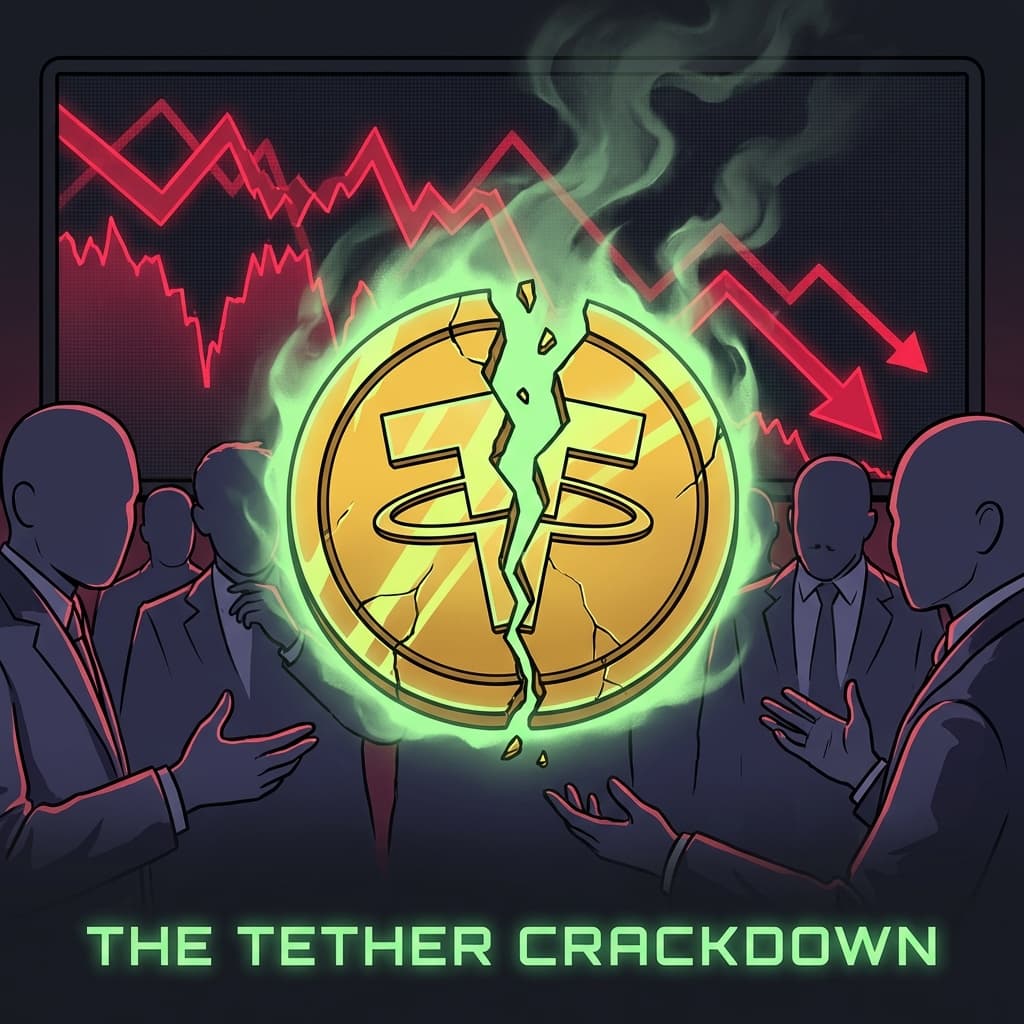
Tether Wobbles as Epstein Connection Surfaces: Is the Peg in Danger?
Reports linking Tether co-founder Brock Pierce to Jeffrey Epstein have triggered a sell-off, pushing USDT to its weakest peg in 5 years. Is the market overreacting, or is the domino about to fall?
Miguel Treviño•
TL;DR:
- The News: Documents reveal years of correspondence (2011-2019) between Tether co-founder Brock Pierce and convicted sex offender Jeffrey Epstein.
- The Reaction: The market panic has caused USDT to de-peg slightly to $0.9980, its lowest level in over five years.
- The Risk: With 87% of crypto volume relying on USDT, a loss of confidence could be catastrophic for the broader market.
- The Lesson: Centralized assets inevitably carry "key person risk." True safety lies in diversifying into decentralized assets and securing them with non-custodial tools like Zelf.
The skeleton in crypto's closet just rattled, and the entire market is holding its breath.
New reports highlighted by Wu Blockchain and DelCrxpto have revealed a troubling connection between Tether co-founder Brock Pierce and the late Jeffrey Epstein.
The Epstein Connection
According to newly released documents covered by Decrypt, Pierce maintained correspondence with Epstein between 2011 and 2019—long after Epstein's 2008 conviction for sex crimes involving minors. The discussions reportedly centered on "meetings and networking opportunities."
While correspondence isn't a crime, in the world of high finance and reputation, it is a massive liability.
The Market Response: The Peg Slips
Markets hate uncertainty, and they hate "reputational contagion" even more.
Following the news, Tether (USDT)—the bedrock of the crypto economy—stumbled.
- The price slipped to $0.9980.
- This marks the weakest peg stability in over 5 years.
- "911 Rumor Alerts" are circulating about a potential run on the bank.
Why the panic? Because USDT isn't just a token; it's the plumbing. Over 87% of all crypto trading volume flows through Tether. If the pipes burst, the house floods.
The Centralization Paradox (Again)
We talk a lot about "decentralization," yet we rely on a stablecoin issuer run by a handful of people with minimal transparency.
When you hold USDT, you aren't holding dollars. You are holding trust.
- Trust that the reserves exist.
- Trust that the regulators won't freeze them.
- Trust that the founders' reputations won't become a systemic risk.
Today, that trust is being tested.
Protect Yourself: Don't Rely on One Pillar
If there is one lesson from 2022 (FTX, Luna) and now 2026, it is this: Single Points of Failure are death.
At Zelf, we believe in minimizing counterparty risk.
- Diversify Stablecoins: Don't keep your entire "dry powder" in one asset (USDT). Consider USDC, DAI, or decentralized alternatives.
- Hold Hard Assets: Bitcoin and Ethereum have no CEO to get cancelled. They have no "Epstein connection." They just have code.
- Self-Custody: If a panic run starts, exchanges will pause withdrawals. We've seen it happen. The only way to ensure you can move your funds to safety is to hold the keys yourself.
Conclusion
Is Tether going to zero? Likely not. It has survived legal battles, bank freezes, and FUD for a decade.
But the crack in the peg is a warning.
The most dangerous thing in crypto is blind faith in centralized entities.
tetherusdtmarket-newsriskstablecoin