블로그로 돌아가기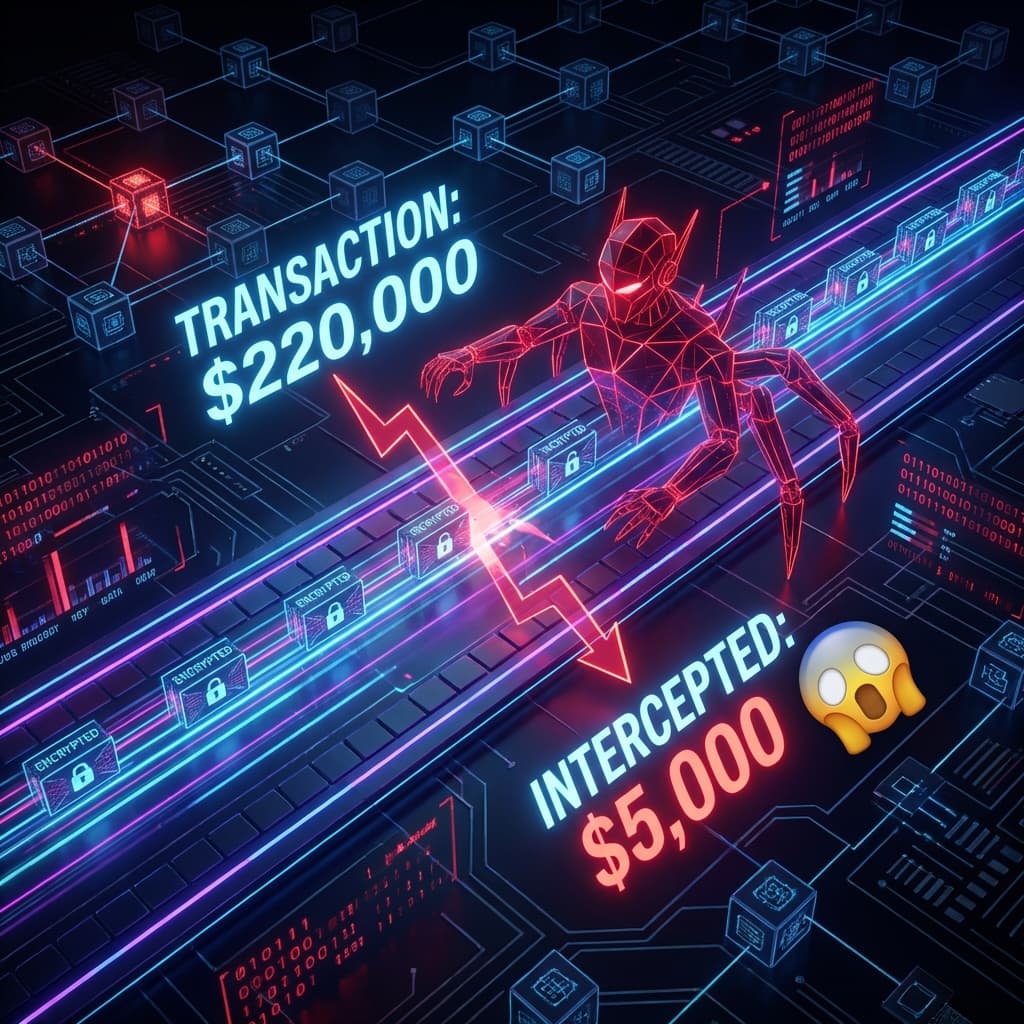
단일 거래에서 22만 달러가 5천 달러로: MEV 악몽
한 사용자가 220,000 USDC를 스왑하려다 5,000달러만 돌려받았습니다. 이것이 MEV이며, 거래 프라이버시가 중요한 이유입니다.
Miguel Treviño•
TL;DR:
- The Event: A DeFi user lost $215,000 in a single swap due to a predatory MEV "sandwich attack."
- The Mechanism: Bots scan public mempools to front-run and back-run large trades, pocketing the price difference from the user.
- The Problem: "Transparency without privacy" on blockchains like Ethereum makes every trade a target for exploitation.
- The Defense: Zelf provides tools like transaction simulation and secure signing to help users spot high-risk slippage and navigate the DeFi Wild West safely.
Imagine clicking "Swap" on $220,000 and watching $215,000 vanish in milliseconds.
That's exactly what happened to one unfortunate DeFi user, as reported by Crypto Fergani:
What is MEV?
MEV (Maximal Extractable Value) is the profit that bots can make by reordering, inserting, or censoring transactions within a block.
In this case, the attack was a sandwich attack:
- Front-run: The bot sees your pending transaction and buys the token first, driving up the price.
- Your Transaction: Executes at the inflated price.
- Back-run: The bot immediately sells, pocketing the difference.
You lose. The bot wins. The blockchain doesn't care.
The Public Mempool Problem
The root cause? Transparency without privacy.
On Ethereum, your transaction sits in a public "mempool" before being mined. Bots scan this mempool 24/7, looking for profitable opportunities to exploit.
It's like announcing your stock trade on a loudspeaker before executing it. Of course you'll get front-run.
The Solutions (And Their Limits)
Flashbots and private mempools help by hiding transactions from public view. But they're not perfect:
- They require trust in relay operators.
- They don't work on all chains.
- They add complexity to the user experience.
Zelf's Approach: Privacy by Design
While we can't eliminate MEV entirely (it's a protocol-level issue), Zelf protects you in other critical ways:
- Transaction Simulation: Before you sign, we show you exactly what will happen—including slippage estimates.
- Secure Signing: Your private keys never touch the browser, reducing the attack surface for malicious dApps.
- User Education: We warn you when you're about to make a high-risk transaction.
The Bigger Picture
This $220K loss is a symptom of a larger problem: DeFi is still the Wild West.
Until we have:
- Better privacy primitives (like ZK-rollups with encrypted mempools)
- Smarter wallets that protect users from themselves
- Regulation that punishes predatory MEV
...these attacks will continue.
Zelf can't fix Ethereum's design. But we can give you the tools to navigate it safely.
mevethereumdefisecurityprivacy